How has the role of work environments and offices changed over the last few years? What is expected of functional work environments and in what kind of spaces do people want to work?
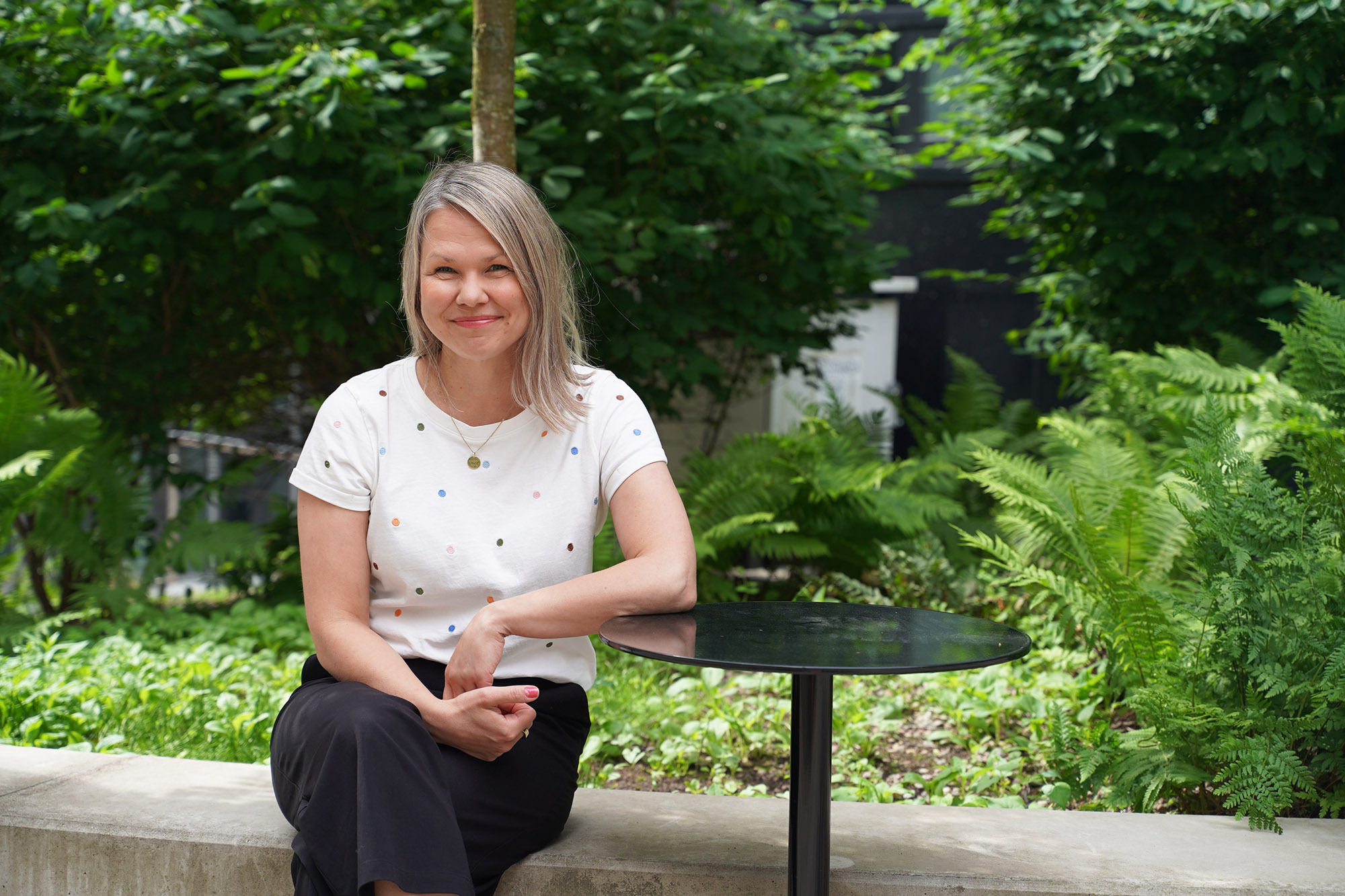
Service Director Leena Puodinketo of Teknologiakiinteistöt examined the impact of changes in working life on the development of work environments and business premises from a property owner's perspective in her Master’s thesis at Oulu University of Applied Sciences.
– In my work, I focused on office and expert work, where remote and hybrid work accelerated by the COVID-19 pandemic, digitalization and technological disruption, as well as demographic changes and the green transition, have changed the ways of working and the expectations placed on work environments, Leena explains.
The most important task of the office is to enable interaction and meetings within the work community.
The use of business premises has undergone a change: remote and hybrid work have become a permanent working model. Office occupancy rates vary daily and have generally decreased. People come to the office more to meet others and collaborate, while routine tasks can be done more easily remotely.
– Demand has not disappeared, but changed from quantitative to qualitative. The most important task of the office is to enable interaction and meetings within the work community, says Leena.
Events and well-being
The communal workspace Werstas by Teknologiakiinteistöt offers solutions for many needs, from sole traders to larger offices. Flexibility is excellently realized according to the customer's space requirements. Even chance encounters are made easy: new ideas and acquaintances can emerge over a cup of coffee in the communal work cafes.
The home office and workplace premises do not compete with each other. Square footage does not tell everything; the appeal of the premises is built primarily on experience. For example, the area's restaurant options, wellness services, events and shared spaces, as well as comfortable facilities that can be used for leisure, are key factors in an office's attractiveness.
– We have identified and taken these matters into account in the daily life of Teknologiakiinteistöt and the entire Tiedepuisto area: user-centricity gives rise to environments where work, social interaction, and leisure activities overlap, Leena continues.
Flexibility of spaces supporting creativity and innovation
Business premises customers often do not know their exact future space needs, and short-term lease agreements have increased. Flexibility and the ability to react to changes in customers' space needs even on a fast schedule are expected from the property owner.
– More is expected from work environments than before: well-being, recovery, and community. Services are perceived as part of everyday life, and greenness and sustainability are also considered important values, Leena says.
Interaction between people is emphasized as technology changes the content of work. Artificial intelligence will reduce routine work, but it will not eliminate the need for offices. Offices support employees' innovation, collaboration, and creativity, and technology increases the need for physical meeting places.
The facilities at Event Centre Joki offer flexible solutions for corporate representation and event space needs, and Joki also serves as a meeting place in the heart of the Science Park. Located near offices, Joki is an excellent venue for both small meetings and larger corporate events and conferences, freeing companies from the burden of maintaining their own meeting and representation spaces.
Sustainable everyday life and urban development
As the most important findings from the research, Leena highlights five points. Offices are primarily perceived as meeting places, not workstations – what people do together matters. Above all, well-being, community, and meaningfulness are valued in work environments.
- – Myös kiinteistönomistajan rooli on muutoksessa: joustavat tilat ja sopimukset ovat jo pakollisia, eikä niitä enää nähdä enää vain kilpailuetuna. Kiinteistönomistajan rooli on muuttumassa tilantarjoajasta arjen fasilitoijaksi, ja työympäristö koetaan osana elämänlaatua, kaupunkikehitystä ja kestävää arkea, Leena päättää.